
OpenClaw (formerly ClawDBot) exploded from 9,000 to over 100,000 GitHub stars in just days, becoming one of the fastest-growing open-source projects in history. But that meteoric rise came with a reality check: within weeks of its viral moment, security researchers discovered critical vulnerabilities requiring immediate patches. According to research from Cisco, 26% of the 31,000 analyzed agent skills contained at least one security vulnerability.
This tension captures the core challenge with OpenClaw. It’s genuinely powerful, offering autonomous AI capabilities that feel like science fiction. But that power demands technical expertise most people simply don’t have. Between OAuth configuration, VPS management, security hardening, and ongoing maintenance across three name changes in two months, OpenClaw asks users to become infrastructure engineers just to run a personal assistant.
If you’ve explored OpenClaw and realized the complexity outweighs the benefits, or if you’re smart enough to research before diving in, you need alternatives that deliver real automation without requiring a computer science degree. Here are the ClawDBot alternatives that actually make sense in 2026.
Why You Should Avoid OpenClaw
Before jumping to alternatives, let’s be honest about OpenClaw’s hidden costs. The software itself is free and open-source, but the operation isn’t. Even when the software itself is free, the real cost shows up in setup time, troubleshooting, model usage, and the ongoing work of securing and maintaining the stack, burning through API tokens while debugging OAuth failures and webhook misconfigurations.
Once running, costs can rise quickly if you pair OpenClaw with premium models and heavy usage. The exact number depends on the model choice, context size, and how often the agent is active, making monthly spend much less predictable than a fixed subscription plan.
Beyond money, there’s the technical burden. OpenClaw requires Node.js expertise, understanding of reverse proxy configurations, OAuth token management, and constant vigilance for security updates. The project changed names twice in a short period, moving from Clawdbot to Moltbot and then to OpenClaw. OpenClaw also faced serious security issues during its rise, including a high-severity flaw disclosed in early February 2026 that researchers said could allow remote code execution through a malicious link. If you’re not comfortable hardening a server and understanding trust boundaries, this isn’t something to deploy on a public VPS.
The real question isn’t whether OpenClaw is impressive. It absolutely is. The question is whether you should be responsible for securing and maintaining it. For most people, the answer is no.
Claude Code
If you’re a developer looking for autonomous coding assistance without OpenClaw’s security risks, Claude Code offers the most direct alternative. Developed by Anthropic, it’s a terminal-based AI coding assistant that includes built-in safeguards that OpenClaw lacks.
The key differentiator is Claude Code’s permission model and tooling ecosystem. Anthropic lets you manage what Claude Code can do with allow, ask, and deny rules, while MCP expands what it can connect to by linking external tools and data sources such as Google Drive, Jira, Slack, and custom internal systems. According to ServiceNow, deploying Claude Code to 29,000 employees resulted in a 95% reduction in seller preparation time.
Pricing is far more predictable than a self-hosted agent stack. Claude Pro costs $20 per month when billed monthly, while Claude Max starts at $100 per month for 5x more usage than Pro and goes up to $200 per month for the 20x tier. Unlike OpenClaw’s unpredictable API costs, you know exactly what you’re paying upfront. The Max plan specifically targets developers who use Claude Code intensively for background tasks such as repository refactoring or running comprehensive test suites.
Where Claude Code falls short is in scope. It’s designed for coding workflows, not general task automation. You can’t use it to manage your email, book flights, or control smart home devices. But if your primary need is to accelerate development with AI assistance, Claude Code delivers OpenClaw’s coding capabilities without the security headaches.
Zapier Agents Automation for Non-Developers
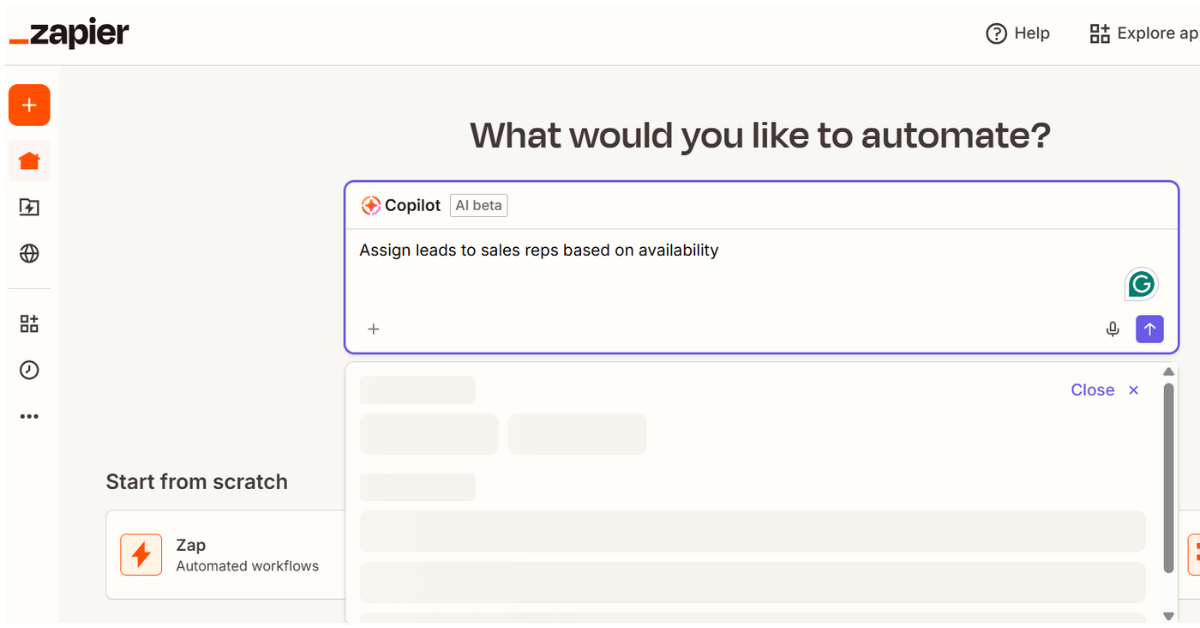
For business users who want AI automation without touching a terminal, Zapier Agents represents the opposite end of the spectrum from OpenClaw. Instead of self-hosting infrastructure and writing configuration files, you describe what you want in plain English, and Zapier handles the implementation.
Zapier Agents sit on top of Zapier’s broader automation platform, which supports more than 8,000 app integrations, to process leads, manage support tickets, draft customer responses, and execute multi-step workflows autonomously. Zapier is positioning agents around the same use cases that are already common in business automation: lead handling, internal support, customer response workflows, and data-heavy operational tasks. The most common approach is human-in-the-loop, where agents draft actions that humans approve before execution.
Zapier’s broader automation plans and its AI agent offering are priced separately, so it is better to treat Agents as their own product line rather than fold them into standard Professional plan pricing. At the time of writing, Zapier Agents includes a free tier and a Pro tier listed at $33.33 per month when billed annually.
Unlike OpenClaw’s variable API costs, Zapier pricing is predictable based on task volume. Security comes standard with SOC 2 and SOC 3 compliance, role-based permissions, and complete audit trails. When something breaks, Zapier’s team handles it. When a security vulnerability emerges, you’re not responsible for patching it yourself.
The trade-off is flexibility. Zapier’s pre-built integrations are powerful but constrained. If you need custom logic that doesn’t fit their node-based workflow model, you’ll hit limitations quickly. But for standard business automation, sales workflows, customer support, and marketing operations, Zapier delivers results without requiring you to become a systems administrator.
n8n
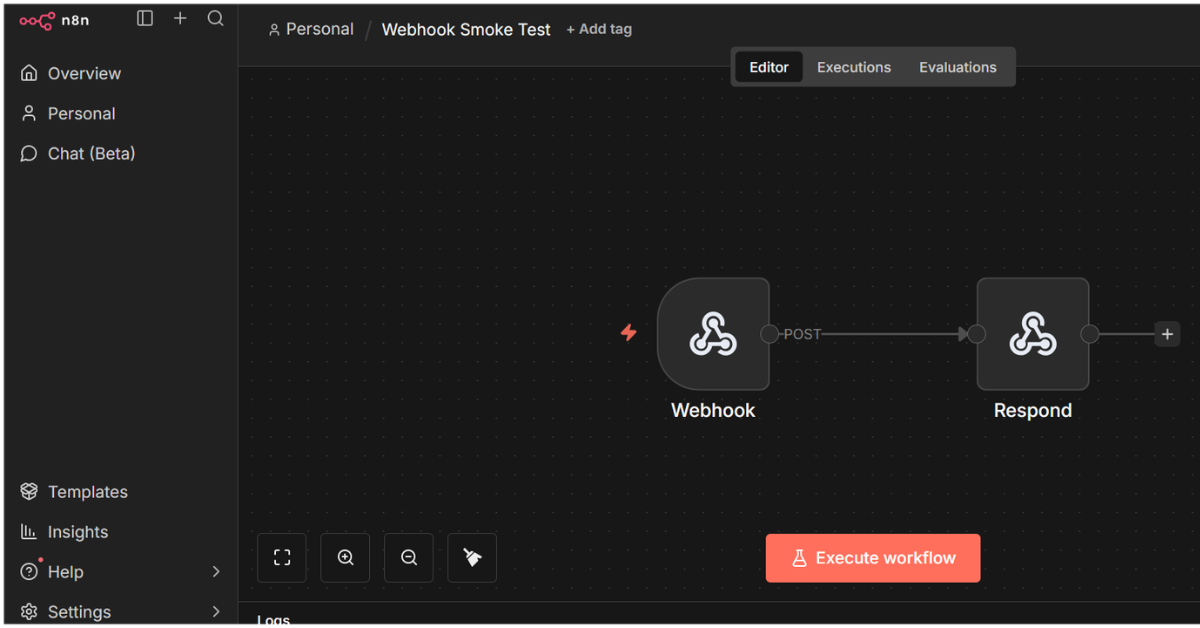
n8n has built a large following among technical teams, and its official pricing page says all plans include every integration, unlimited users, and unlimited workflows. That makes it a practical middle ground for teams that want more control than Zapier without taking on OpenClaw’s full operational burden.
The platform uses a visual workflow builder where you connect nodes representing different services and actions. Unlike Zapier, you can write custom JavaScript code directly in workflows when pre-built nodes don’t suffice. The AI Agent builder lets you design context-aware agents with memory and tool access using the same visual canvas. For teams comfortable with Docker and wanting data sovereignty, n8n can be self-hosted with complete control over where automation runs and how it’s secured.
Pricing flexibility makes n8n accessible. The self-hosted version is free under a fair-code license, with you covering only infrastructure costs. n8n’s cloud pricing is usage-based rather than a flat, low-entry team plan, with its official pricing centered on monthly workflow executions rather than on unlimited runtime.
Enterprise deployments are better suited to regulated environments because n8n publishes SOC reporting, documents its security program, and highlights controls such as secure credential storage and role-based access. But compliance still depends on how and where you deploy it, so it is safer to avoid treating HIPAA support as automatic.
Where n8n demands more than Zapier is the learning curve. The visual builder is intuitive compared to writing code from scratch, but you’re still building logic flows, managing error handling, and thinking about workflow architecture. It’s not as simple as telling an AI what you want in natural language. But for technical teams seeking powerful automation with control over their data, n8n delivers without OpenClaw’s operational burden.
Other ClawDBot Alternatives Worth Considering
Make (formerly Integromat) offers more powerful workflow capabilities than Zapier, with complex logic, loops, and data transformations at a lower cost. Free plans are available, with paid tiers starting at $9 per month. It’s ideal for users who find Zapier too limiting but don’t need n8n’s full technical depth.
For enterprise teams deeply invested in Microsoft 365, Copilot Studio provides agent-building capabilities integrated directly with company data and communication channels. It’s included with certain Microsoft 365 plans and designed for business users to create custom automation without IT involvement.
Developers wanting complete customization can build on LangChain and LangFlow, open-source frameworks for creating AI agents from scratch. This approach offers maximum flexibility but requires significant AI expertise and development time. It makes sense when you need capabilities that no existing platform provides.
A Simple Framework To Make Your Choice
Choose Claude Code if you’re primarily automating development workflows and want Anthropic’s security standards built in. It’s the developer-focused alternative with clear boundaries and predictable costs.
Choose Zapier Agents if you’re a business user automating sales, support, or marketing workflows across common SaaS tools. The higher per-task cost pays for convenience, reliability, and not becoming your own IT department.
Choose n8n if you’re a technical team wanting powerful automation with data control, willing to invest time learning the platform in exchange for flexibility and self-hosted options.
Avoid OpenClaw unless you are a security-conscious technical user comfortable with infrastructure management, frequent updates, and responsibility for hardening and monitoring your own deployment. The global AI market reached $757.58 billion in 2026 and is projected to hit $3.68 trillion by 2034, according to Precedence Research, driving massive investment in managed alternatives that deliver OpenClaw’s capabilities without the operational burden.
Key Takeaways
OpenClaw’s power comes with security risks and complexity that most users shouldn’t accept. Security research identified vulnerabilities in 26% of the analyzed agent skills, and real operational costs often range from $300 to $ 750 per month.
Managed platforms deliver 80% of OpenClaw’s functionality with significantly less risk. Claude Code, Zapier, and n8n provide robust automation with built-in security, predictable pricing, and professional support.
Your technical skill level should drive selection more than feature comparisons. Non-developers benefit most from Zapier’s simplicity, while technical teams gain value from n8n’s flexibility.
Security and compliance requirements matter for production use. SOC 2 compliance, audit trails, and role-based permissions aren’t optional for business-critical automation.
Total cost of ownership extends beyond subscription fees. Factor in setup time, maintenance burden, security responsibility, and opportunity cost of managing infrastructure yourself. For most users, managed alternatives deliver better ROI than “free” open-source solutions requiring full-time attention.