


AI agents are beginning to change data science less by replacing the profession and more by taking over connected sequences of technical work. A modern agent can inspect data, propose an analysis plan, generate SQL or Python, execute code, read the output, correct errors, and continue toward a stated goal. Databricks’ Genie Code and Google’s Data Science Agent already support parts of this workflow, including data discovery, exploratory analysis, notebook editing, model training, and result interpretation.
That capability changes the data scientist’s job. Instead of manually producing every query, chart, transformation, and baseline model, practitioners can supervise systems that perform those steps. The important boundary is not whether an agent can generate an answer. It is whether the work can be delegated safely, checked reliably, and connected to the business problem behind the analysis.
AI Agents Are More Than Coding Assistants or AutoML
A coding assistant generally responds to a specific request: complete a function, explain an error, or generate a query. AutoML automates a narrower modeling process, such as selecting algorithms, tuning parameters, and comparing metrics. An AI agent can coordinate multiple tools and decisions across a longer task.
Suppose a company asks why customer churn increased. An assistant might write SQL after receiving detailed instructions. An AutoML system might train several models after someone prepares a dataset. An agent can go further: locate relevant tables, inspect schemas, create a plan, query the data, clean missing values, build visualizations, train a baseline model, and summarize possible explanations.
Current products demonstrate this distinction. Genie Code can search tables, edit notebooks, run cells, and interpret outputs after receiving permission. Google’s Data Science Agent can create a plan and perform exploration, cleaning, feature engineering, model training, optimization, evaluation, and inference inside Colab Enterprise.
| Tool Type | Typical Role | Human Involvement |
|---|---|---|
| AI assistant | Generates or explains an individual output | Directs each step |
| AutoML | Automates a defined modeling process | Prepares data and evaluates models |
| AI agent | Plans and executes connected tasks | Defines goals, permissions, and approvals |
The categories can overlap, but the operational difference matters. An agent can propagate one bad assumption through several steps before a person notices it.
Agents Will Automate the Most Verifiable Parts of the Workflow
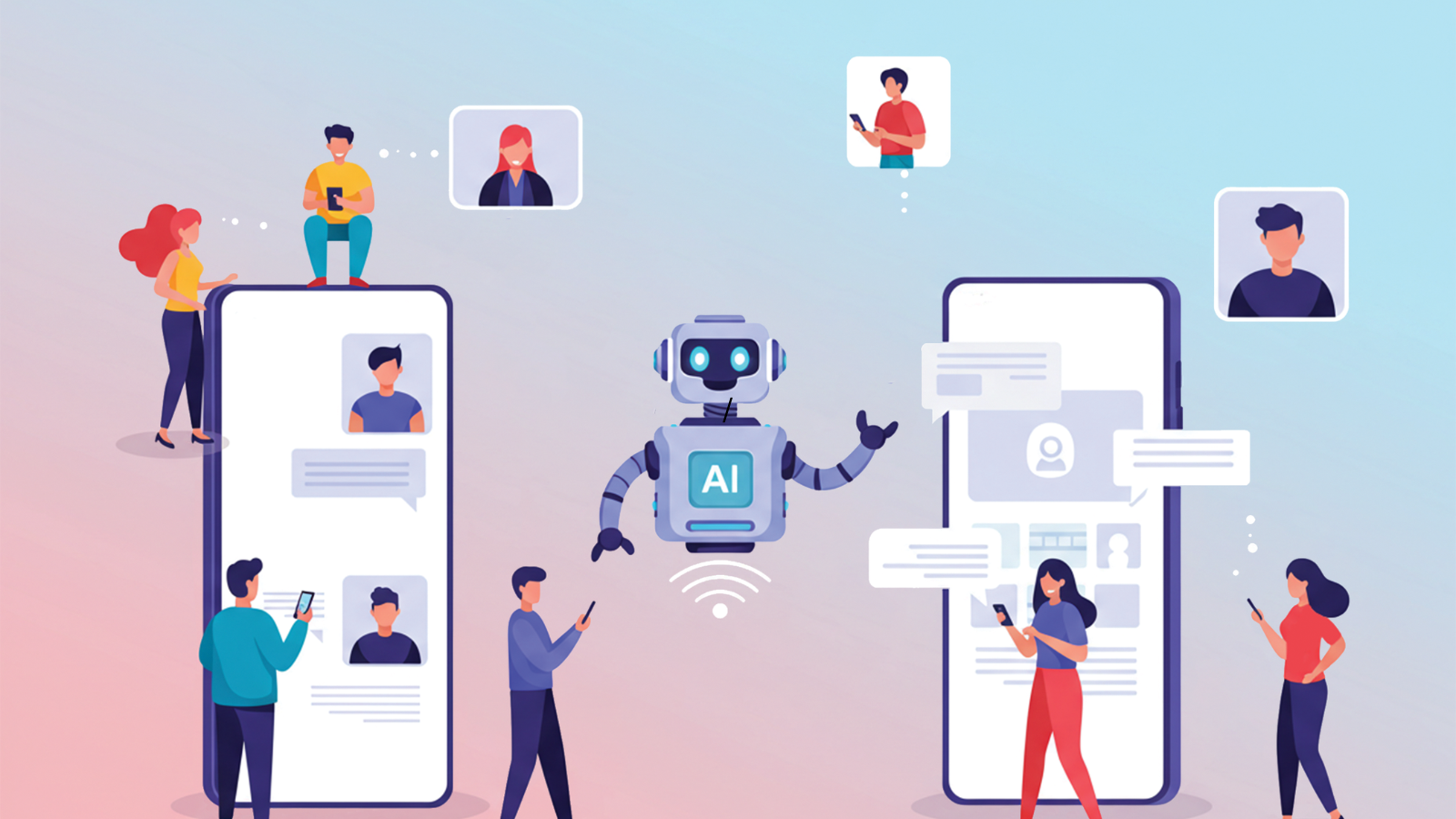
AI agents are best suited to tasks whose outputs can be checked against schemas, tests, code execution, or numerical metrics. Data discovery, initial cleaning, exploratory summaries, chart generation, feature suggestions, baseline modeling, and experiment comparison fit this pattern.
A data scientist could ask an agent to inspect a sales dataset, identify missing values and outliers, compare demand across regions, create time-series plots, train two forecasting models, and report their validation errors. The agent can perform much of the execution while the practitioner verifies the assumptions.
| Data Science Stage | Likely Agent Role | Human Responsibility |
|---|---|---|
| Problem definition | Assist | Define the decision and success criteria |
| Data discovery | Execute with supervision | Confirm relevance and permissions |
| Cleaning and exploration | Execute | Review unusual records and assumptions |
| Feature engineering | Suggest and test | Prevent leakage and confirm domain meaning |
| Model experimentation | Execute | Choose metrics and trade-offs |
| Evaluation | Assist | Decide whether results are trustworthy |
| Deployment | Limited execution | Approve security and operational changes |
| Monitoring | Detect and summarize | Decide when intervention is required |
| Business interpretation | Assist | Own the recommendation and consequences |
The 2026 AgentDS benchmark evaluated 17 challenges across six industries and found that AI-only baselines performed near or below the median of competition participants. The strongest solutions came from human-AI collaboration, while agents struggled with domain-specific reasoning.
Another 2026 benchmark tested enterprise-style questions across multiple datasets and database systems. Its best evaluated frontier model achieved 38% pass@1 accuracy, producing a fully correct first-attempt result for fewer than four in ten tasks. These results show why generated work still needs verification.
Human Judgment Will Move Earlier and Later in the Process
As agents handle more execution, the most important human work moves toward the beginning and end of an analysis.
At the beginning, someone must translate an unclear business request into a valid analytical question. “Find the cause of churn” leaves critical choices unresolved. Which customers count as churned? Over what period? Is the goal prediction, explanation, or intervention? Which costs matter when choosing a threshold? An agent can propose answers, but it does not own the business decision.
At the end, a data scientist must determine whether the evidence supports action. A model can score well while relying on information unavailable at prediction time. A regional sales pattern can be statistically real but commercially irrelevant. A correlation can look persuasive without establishing a cause.
Human oversight therefore cannot mean checking only whether the notebook runs. It must include challenging the dataset, assumptions, metric, comparison group, uncertainty, and interpretation.
This preference for selective automation also appears beyond data science. Stanford researchers collected perspectives from 1,500 workers across more than 844 tasks and 104 occupations. Their results showed varied preferences for human involvement rather than a simple desire to automate everything technically possible.
Faster Analysis Creates New Technical and Governance Risks
An agent that can execute code and query production data can make mistakes faster than a person working step by step. The main risks include expensive queries, exposure of sensitive information, target leakage, incorrect joins, irreproducible transformations, and polished summaries built on faulty results.
For example, an agent might repeatedly join two large event tables while refining an answer. Each query may be valid, yet the accumulated cloud cost can become substantial. It might also select a post-outcome variable that makes a model appear unusually accurate.
Platforms acknowledge these risks. Databricks asks users to approve tool actions such as running code and warns that generated code still presents risk despite guardrails. Its agent operates under the user’s existing permissions. Microsoft Fabric data agents enforce read-only access, use the requesting user’s credentials, and can apply governance policies such as data-loss prevention and access restrictions.
Safe deployment should include:
- Read-only access by default
- Human approval for expensive, destructive, or external actions
- Query, runtime, and compute limits
- Logs of plans, code, tool calls, and outputs
- Reproducible environments and versioned configurations
- Automated checks for schema changes, leakage, and invalid results
- Escalation for low-confidence or high-impact decisions
Product limitations also matter. Google’s Data Science Agent currently works only in Colab Enterprise, supports CSV files and BigQuery tables, and does not support customer-managed encryption keys. Microsoft Fabric’s agent is read-only, does not support unstructured files, and limits conversational results rather than returning complete datasets.
Entry-Level and Senior Roles Will Change Differently
AI agents place the most immediate pressure on repetitive tasks often assigned to junior practitioners: writing first-pass SQL, producing exploratory notebooks, generating standard charts, fixing syntax errors, and training baseline models. These tasks will not disappear from every workplace, but completing them manually will become less valuable as a standalone skill.
That creates a difficult career transition. Junior data scientists traditionally learn by doing routine work and receiving feedback. When an agent produces the first draft, new practitioners must learn through reviewing, testing, and improving generated work. Portfolios containing polished notebooks without explaining validation choices will provide weaker evidence of competence.
Senior roles will also change. Experienced practitioners may supervise more analyses, design approval boundaries, evaluate failures, and decide which workflows are safe to automate. Greater throughput can increase responsibility because one person may become accountable for more automated decisions.
The durable advantage will be detecting when technically plausible work is wrong. Domain knowledge, statistical reasoning, data governance, and communication become more important when generating code and charts becomes easier.
The Skills Data Scientists Should Build in 2026
Prompting is useful, but it is not a complete data science strategy. Practitioners need enough technical depth to direct an agent and independently judge its work.
The most valuable skills are:
- Problem formulation: Convert vague requests into measurable questions, constraints, and success criteria.
- Statistical validation: Detect leakage, bias, weak samples, misleading metrics, and unsupported causal claims.
- SQL and Python review: Check generated code for correctness, efficiency, security, and reproducibility.
- Agent workflow design: Define tools, permissions, checkpoints, tests, and escalation rules.
- Data governance: Understand access controls, privacy boundaries, audit requirements, and retention policies.
- Domain knowledge: Recognize when an output conflicts with operational reality.
- Communication: Explain uncertainty and limitations without hiding them behind technical language.
A practical way to learn is to start with a low-risk workflow. Give an agent access to non-sensitive data, require it to present a plan before execution, record every action, and compare its conclusions with a manually reviewed analysis. The goal is to identify which steps can be trusted, which need tests, and which require human approval.
AI Agents Will Change Execution More Than Accountability
AI agents will reduce the manual effort required for data discovery, cleaning, exploration, coding, experimentation, and reporting. They will also create new work around validation, permissions, observability, governance, and workflow design.
Data scientists will not remain valuable by competing with agents at producing routine code. Their advantage will come from defining the right problem, recognizing weak evidence, understanding the operating context, and deciding when an automated result is safe to use.
The practical shift in 2026 is not from human data scientists to autonomous data science. It is from manually executed workflows to supervised, agent-assisted workflows in which humans retain responsibility for the decisions that matter.
Disclosure
Product features and limitations were verified on July 22, 2026. Databricks, Google Cloud, and Microsoft may change agent names, availability, supported data sources, approval behavior, or governance features. We will review and update these details periodically.
Employment effects remain an evidence-based projection rather than a confirmed outcome. The article therefore avoids claiming a specific number of jobs will be created or eliminated.

